How Supermarkets Influence Shoppers
Here is a great graphic from the Center for Science in the Public Interest laying out how supermarkets lay out food to encourage impulse purchases:
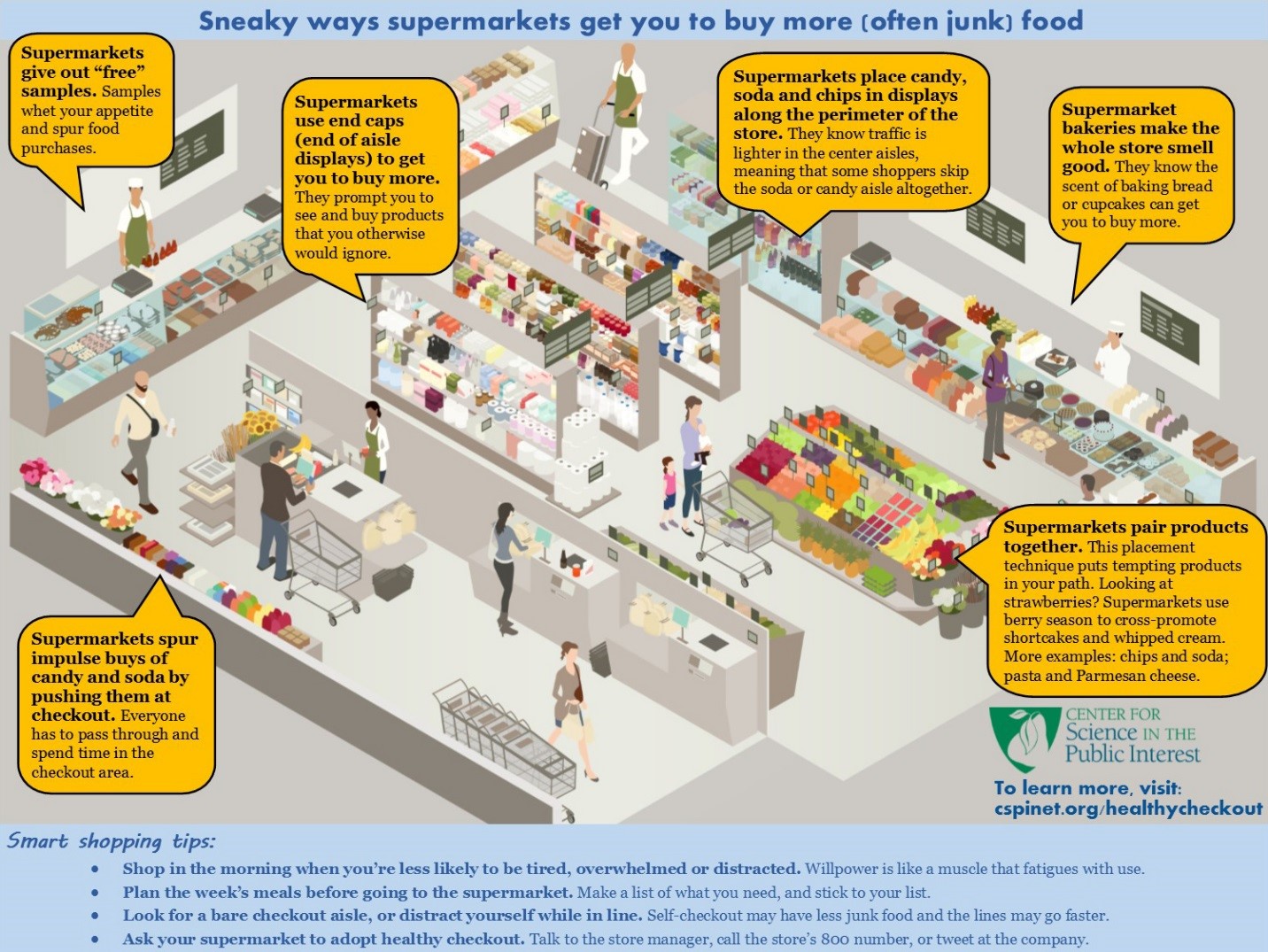
So much for “free” markets!

Here is a great graphic from the Center for Science in the Public Interest laying out how supermarkets lay out food to encourage impulse purchases:
So much for “free” markets!
We Americans are notoriously bad at saving money. While people in Germany, Sweden and even France save about 10% of the money they make, folks in the U.S. save closer to 3 or 4% of their earnings. With so little money saved, Americans face difficulty absorbing economic shocks like recessions and layoffs, and also find…
I have written about medical marijuana before, relaying research findings showing that the legalization of medical marijuana is associated with a reduction in use of pain medications. Here’s another piece of evidence leading to a similar conclusion, from a study by the research team of Bradford and Bradford out of the University of Georgia. (Athens,…
She drew the life-saving medication into the syringe, just 10cc of colorless fluid for the everyday low price of, gulp, several hundred dollars. Was that a new chemotherapy, specially designed for her tumor? Was it a “specialty drug,” to treat her multiple sclerosis? Nope. It was insulin, a drug that has been around for decades….
In a recent article in the Atlantic magazine, Amanda Ripley argues that we should dramatically diminish, or even get rid of, high school sports in the United States, because they are throwing off our priorities and sucking up our funding. I began the article with even more than my typical skeptical eye, having written not long ago…
President Ronald Reagan was famous for espousing anti-government views. To this day, he is lionized by Republicans, who frequently quote his “less is more” attitudes towards government. Which makes it kind of ironic that when he was in office, Republican faith in government rose significantly. In fact, when you ask people whether they trust the…
Shutterstock He came to the ER with chest pain, shortness of breath, and atrial fibrillation with a heart rate of almost 120 beats per minute. It wasn’t a heart attack, and it wasn’t some rare disease. He was emergently ill because his physician overreacted to blood tests, and prescribed a thyroid pill he didn’t need….