On Distractions
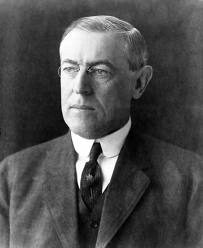 Widower Woodrow Wilson fell in love with Edith Galt in 1915. The President’s doorkeeper summarized the situation tersely:
“She’s a looker; he’s a goner.”

Widower Woodrow Wilson fell in love with Edith Galt in 1915. The President’s doorkeeper summarized the situation tersely:
“She’s a looker; he’s a goner.”
Thanks to science, we are confronted with new discoveries every day. But there are some things that science can’t teach us, and which we need to learn without its help. This point was made marvelously in an essay in the Atlantic monthly by Clancy Martin, who was discussing the increasing number of popular books written by…
Check out this clever takeoff of the Mac/PC ads by my friend Dan Ariely, in which he portrays standard economics as a PC and behavioral economics, my specialty, as an iMac.
Here’s the opening paragraph from a New York Times magazine article published in May of this year, about monk seals. What a great way to open the piece: The Hawaiian monk seal has wiry whiskers and the deep, round eyes of an apologetic child. The animals will eat a variety of fish and selfish, or…
“Blindness cuts us off from things, but deafness cuts us off from people.” – Helen Keller (Click to view comments)
Somewhere near where you live, a couple will discover this week that they are infertile and that if they want biological children of their own, they are going to need in vitro fertilization (or IVF). According to treatment protocol, the woman will need to take powerful medicines to ramp up her production of fertilizable eggs….
 According to a new study, daycare will increase your child’s health, intelligence and social development. But do you think the study is scientifically rigorous enough to justify this conclusion?
read more
View original post and comments at Scientocracy