Asimov on Scientific Discovery
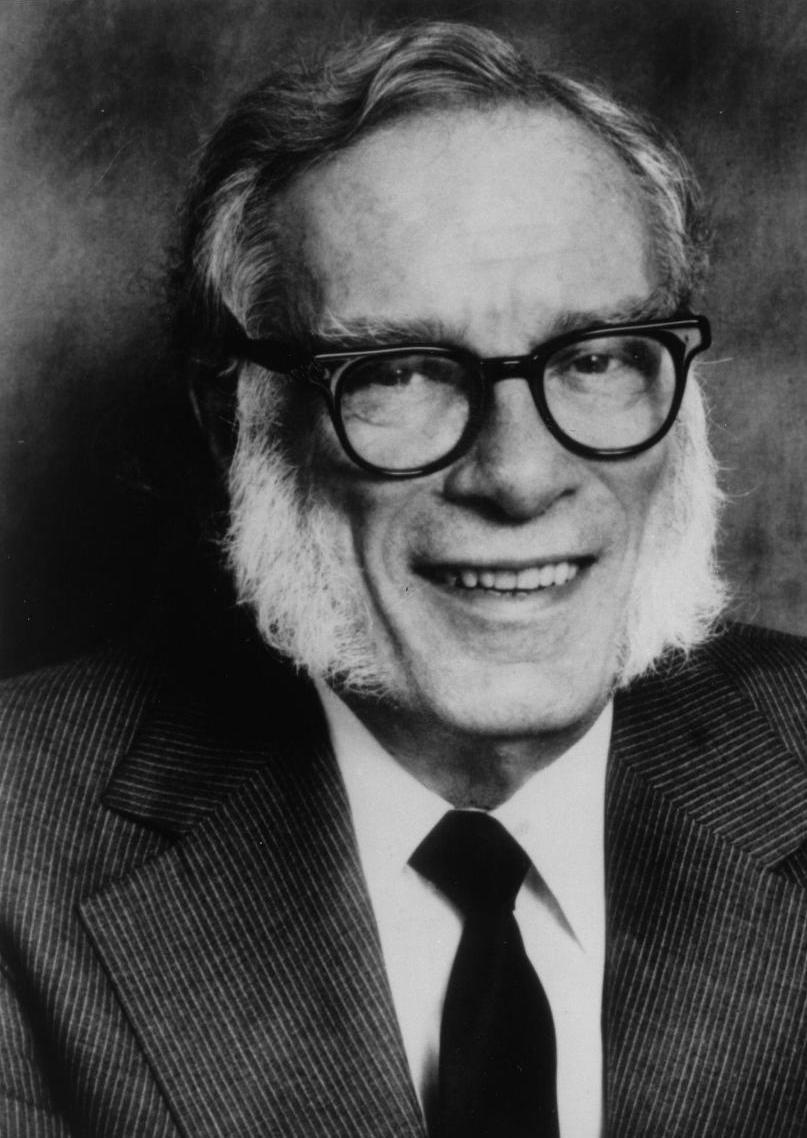 “The most exciting phrase to hear in science, the one that heralds new discoveries, is not ‘Eureka!’ [I’ve found it!], but ‘That’s funny.’
(Click here to view comments)

“The most exciting phrase to hear in science, the one that heralds new discoveries, is not ‘Eureka!’ [I’ve found it!], but ‘That’s funny.’
(Click here to view comments)
When people mention Bayes’ Theorem, the cornerstone of much of modern probability thinking, most do not realize that much of the thinking to develop this theorem was done by Pierre-Simon Laplace, a French astronomer and mathematician. As if his work on that theorem was not enough to make him one of my heroes, I recently…
In many ways, Jeremy Bentham was all about equality. As the father of utilitarianism, he believed that all social policy should be designed to maximize the happiness and pleasures of humans’ experience while minimizing the pains and miseries. And in espousing this theory of justice, he didn’t distinguish between upper class and lower class and…
A recent Time magazine article by Steven Brill has received a lot of attention, for highlighting some of the crazy ways that hospital set their prices. One quote in particular caught my attention. It had to do with what hospitals call the charge master, which is essentially a big list of what they charge for…
Here are some details on a live web chat I’m having on Friday. Feel free to send in some fun questions.
Thanks to science, we are confronted with new discoveries every day. But there are some things that science can’t teach us, and which we need to learn without its help. This point was made marvelously in an essay in the Atlantic monthly by Clancy Martin, who was discussing the increasing number of popular books written by…
Somewhere near where you live, a couple will discover this week that they are infertile and that if they want biological children of their own, they are going to need in vitro fertilization (or IVF). According to treatment protocol, the woman will need to take powerful medicines to ramp up her production of fertilizable eggs….