Finally! Starting to Study Food Waste
In developed countries, upwards of 65% of food is wasted, meaning that somewhere from farm to table it ends up in the trash. Fortunately, researchers are finally beginning to study the problem:
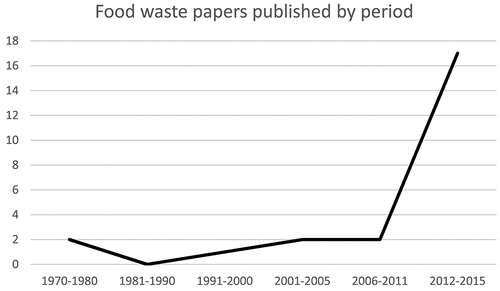

In developed countries, upwards of 65% of food is wasted, meaning that somewhere from farm to table it ends up in the trash. Fortunately, researchers are finally beginning to study the problem:
Here is an article in the Duke University student newspaper, summarizing a public forum I led last night. Really nice summary—almost makes me sound coherent! In the midst of an ongoing debate about the future of the nation’s health care system, Duke professor Peter Ubel discussed the limitations of the current system and encouraged bipartisan solutions at a…
A while back, I wrote a piece on the problems caused when hospitals don’t coordinate care in a way that promotes patient sleep. Now Shefali Luthra, a reporter at Kaiser Health News, has written a great piece, delving deeper into this issue. Here is the beginning of that story: Hospitals are reviewing their patient-sleep policies and…
Do you think it is safe to eat genetically modified foods? I do, because I believe that most foods we eat have been genetically modified. Cows wouldn’t be cows if humans hadn’t changed them genetically, through breeding practices. That also might be because I’m a scientist, and one of the beliefs that separates scientists from…
I blog frequently about obesity. I think the most important thing we can do, as a nation, to combat obesity is to try to prevent our next generation of children from becoming obese. Once people become obese, almost no diet in the world will consistently help them lose weight and maintain that weight loss. But…
This study came out a while ago, from ICYMI. The research team called up primary care practices and tried to make appointments for Medicaid patients. When states raised reimbursement rates, it became easier: Health insurance doesn’t do much good when patients can’t find doctors willing to accept crappy reimbursement.
Here is a Kaiser Health News/NPR story on our research on healthcare cost conversations in doctor’s offices. Talking about money is never easy. But when doctors are reluctant to talk about medical costs, patients’ health can be undermined. A study published Monday in the journal Health Affairs explores the opportunities that are often missed in the exam room. Patients…