Health Insurance Trends in One Picture
Here is data from the CDC, on the percent of Americans without health insurance. It shows that Obamacare, for all its strengths and weaknesses, is definitely addressing one major problem in the US:
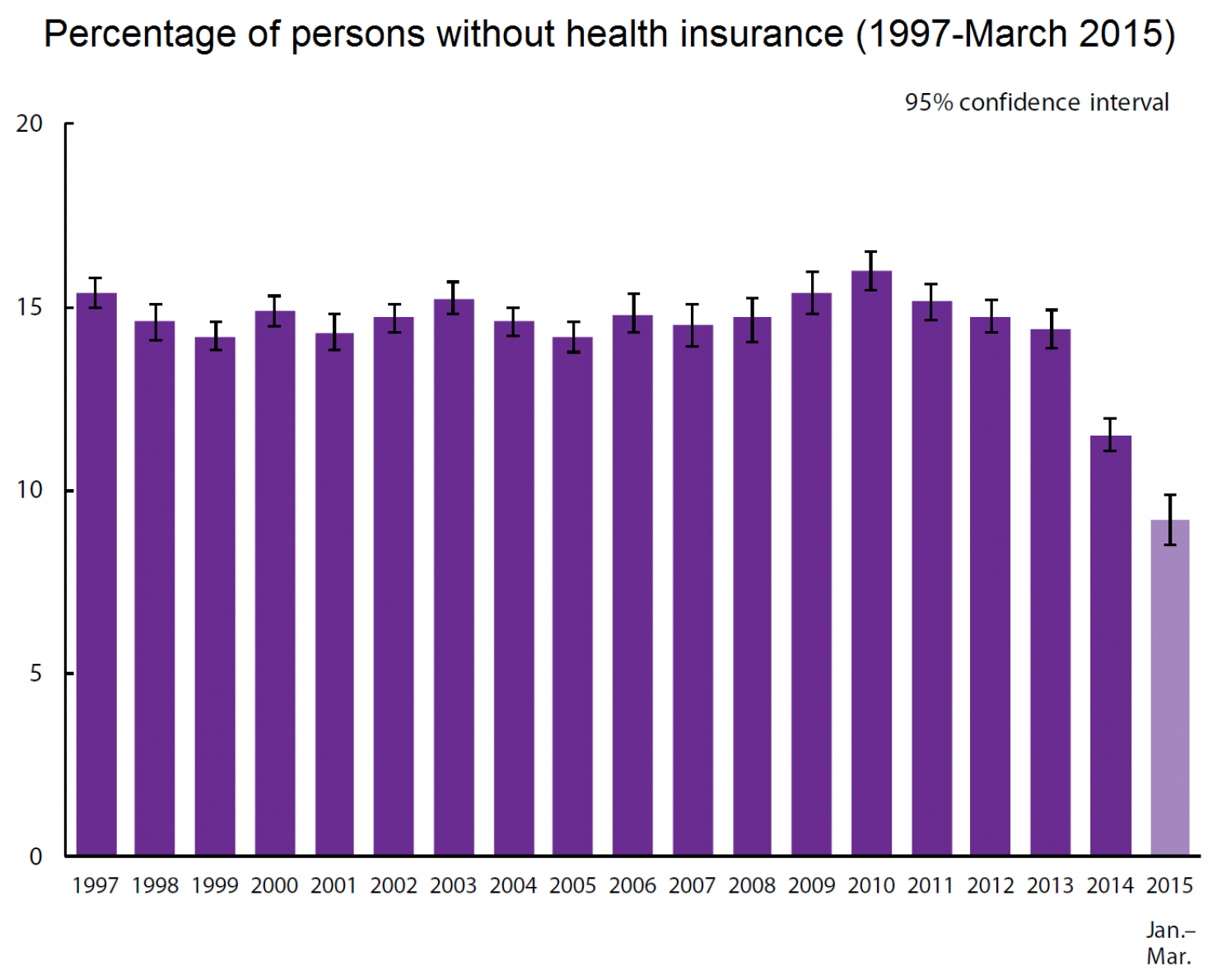

Here is data from the CDC, on the percent of Americans without health insurance. It shows that Obamacare, for all its strengths and weaknesses, is definitely addressing one major problem in the US:
If you thought donuts were bad for your health, consider donut holes. Specifically, the donut hole sitting smack in the middle of Medicare Part D, the program helping senior citizens pay for their medications. The donut hole is a gap in coverage causing people, once they’ve received a certain level of financial support for their prescriptions, to have to go it alone for a while, bea
read more
View original post and comments at Scientocracy
About one in fifty people reading this essay will be diagnosed with kidney cancer at some time in their life. In fact, one out of one people writing this essay has already been diagnosed with kidney cancer. (I had a small tumor removed from my left kidney not long after I turned 50.) But how many people…
Let’s warm up with a quick arithmetic problem, which I want you to do in your head. What is one thousand plus forty? Now add another thousand And thirty more Plus twenty Plus another thousand And finally, add an additional ten. What’s the answer? According to Dean Buonomano, in his excellent book Brain Bugs, the majority…
“Why It’s Not Time for Health Care Rationing” – Hastings Center Report
Shutterstock Knee replacements are booming. Between 2005 and 2015, the number of knee replacement procedures in the U.S. doubled, to more than one million. Experts think the figure might rise 6-fold more in the next couple decades, because of our aging population. Since many people receiving knee replacements are elderly, Medicare picks up most of…
It is pretty easy to be against Obamacare these days. The federal government can’t come up with a working website to help people buy health insurance. The President misled people about whether they could hold onto their old insurance plans. And come next tax day, the least popular provision of the Affordable Care Act –…