Provocative Words on Robots

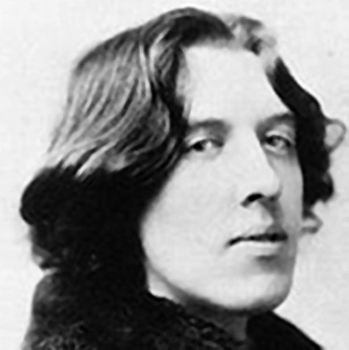
Oscar WildeOscar Wilde is one of the most quotable people in history of the English language. He even had ideas about robots, many decades before people had any idea what robots could achieve. And in typical Wildean fashion, he provocatively tied it together with his attitudes on the advantages of slavery:

“Unless there are slaves to do the ugly, horrible, uninteresting work, culture and contemplation become almost impossible. Human slavery is wrong, insecure, and demoralizing. On mechanical slavery, on the slavery of the machine, the future of the world depends.”

Or as a Steely Dan might put it: we’d be fools not to have robots do our dirty work, oh yeah!
(Click here to view comments)


Similar Posts

  • Great Writing, But Not by the Author of the New Thomas Jefferson Biography

    Jon Meacham’s best-selling biography, Thomas Jefferson: The Art of Power, is at best a solid read, presenting the basic facts of Jefferson’s life competently but with little grace and an almost invisible point of view. Perhaps I have been spoiled by Robert Caro’s amazing series of books on Lyndon Johnson, four volumes so far that not only make Johnson come to life (his ruthless genius as well as his fascinating contradictions) but also illuminate a whole era in U.S. history, all the while enveloping readers in gloriously rhythmic paragraphs. It is not fair, perhaps, to compare any biographer to Caro. Meacham’s book, after all, is just a single volume, so it cannot explore Jefferson in the same depth that Caro portrays Johnson. Meacham also had the disadvantage of writing about a man who lived a couple hundred years ago, whereas Caro could interview people who knew the subject of his biography firsthand. In addition, Meacham is a busy man, running a publishing company and appearing on television shows, whereas Caro lives the life of an obsessive, dedicating the better part of his adult life to understanding the ins and outs of Johnson’s life.
    Nevertheless, if you are going to write a book about an American president and subtitle it “The Art of Power,” you better expect some Caro comparisons.
    As it turns out, however, being compared to Caro is the least of Meacham’s writerly problems. Because there is another great writer that readers won’t be able to ignore when making their way through Meacham’s book. That writer, of course, is Thomas Jefferson.
    I’m going to give you a sprinkling of Jefferson’s prose in a bit, and follow-up later this week with several other great Jefferson quotes. But first, a little bit more on Meacham’s book. I was really disappointed, because in Meacham’s hands, Jefferson rarely comes alive on the page. Time passes by and suddenly the reader realizes: “Jefferson just became governor of Virginia? Was that something he was trying to accomplish? Which of the arts of power did he employ to reach that position?” Meacham never provides answers to these kinds of questions.

Leave a Reply