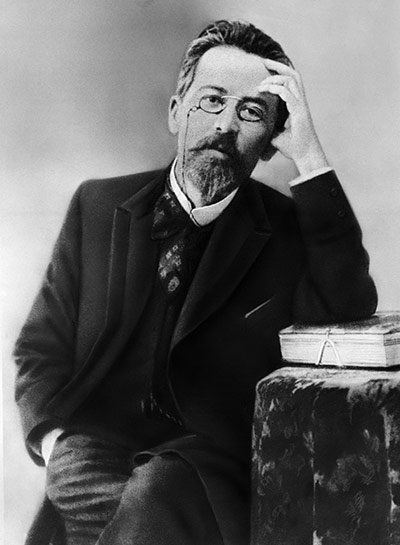
Quote of the Day
“When many remedies are proposed for a disease, that means the disease is incurable.”
-Anton Chekhov

“When many remedies are proposed for a disease, that means the disease is incurable.”
-Anton Chekhov
Recently I have posted several entertaining pictures revealing the dangers of assuming that correlation implies causation. A lot of these pictures are housed on this fascinating website. Meanwhile, here’s another one I had to pass along: This can’t be coincidence, right? With all the strange movie choices Nicholas Cage makes, I always knew he was…
This is how Fanny Burney described the mastectomy she received in 1811, a long time before effective anesthesia was available: I mounted, therefore, unbidden, the bed stead. When the dreadful steel was plunged into the breast – cutting through veins – arteries ––flesh – nerves – I needed no injunctions not to restrain my…
One of the great pleasures of blogging is reaching new audiences and, better yet, interacting with new people. On the other hand, blogging also puts us bloggers into contact with unpleasant commenters. This unpleasantness has compelled me to establish some guidelines for my own on-line behavior. First, I strive always to blog, and to comment…
In recent posts, I’ve presented several interesting pictures of how arbitrary thresholds influence behavior. I showed how airplane pilots speed up flights to make on-time arrivals, but don’t speed up late flights that won’t make it on time. I’ve shown that the price of used cars changes when the mileage on the odometer passes arbitrary round…
Do you feel like your out of pocket medical expenses are growing? You are not alone. Even for people getting Medicare, the amount of money coming out of patients pockets is growing too. And it is growing not only because all health care spending is growing, but also because patients are being asked to bear…
 When New Jersey decided to hike its minimum wage by some 20 percent in 1991, David Card and Alan Krueger recognized a tremendous opportunity to test how the minimum wage affects employment.
read more
View original post and comments at Scientocracy