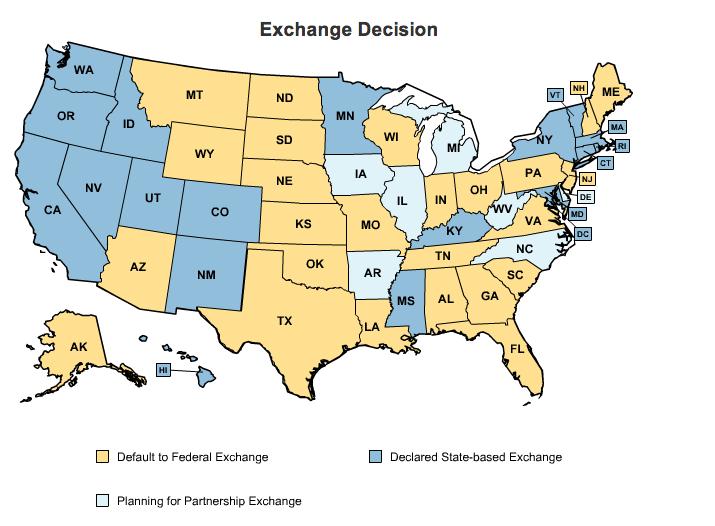
Health Insurance Exchange Decisions…So Far!
But in this partisan world, not all states are going ahead with the idea of creating these exchanges. The Washington Post’s Sarah Kliff has a nice summary, in one simple picture, of where things stand:
The problem with the FDA is that if often requires so much proof of safety and effectiveness that the time it takes to bring a new product to market can grow by 3, 4, or even more years. FDA delays into the time that companies have to exclusively produce and sell their products. In recognition…
In the previous two posts, I show that out of pocket costs are rising given the increasing prevalence of high deductible insurance plans. That means that even though you have insurance, you are going to be paying for your own care until you reach the deductible. Here is a picture showing that out-of-pocket costs are…
Here is a very interesting picture from the Atlantic website, charting the unpredictability of healthcare costs. The picture was put into the article in large part to point out how hard it is to estimate how much healthcare costs will grow over time. And certainly, the up-and-down roller coaster like quality of this picture is…
As you know from a couple of my earlier posts, I am exploring the ins and outs of price transparency in health care. Here is a nice post by William Pierce in the Huffington Post that pulls together a number of nice links while musing about the complexities of this issue. Pierce’s post makes mention…
Paige Rentz, an excellent reporter at the Fayetteville Observer, recently posted a question and answer piece, exploring some of the pressing issues facing the second round of insurance enrollment, on the Obamacare health insurance exchanges. I suggest you look at the entire article. But here is a snippet: What’s at stake? Last year, North Carolina…
India is not, yet, a wealthy country. Nevertheless its people experience many of the same expensive-to-treat illnesses as wealthier populations in the U.S. and Europe. Therefore the country has made a series of policy decisions designed to lower the cost of medical treatments. For example, until 2005, it offered no – I repeat, no –…