Environmental Destruction Pre-Global Warming
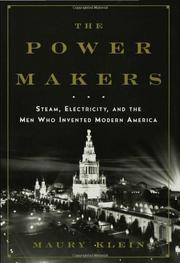
Early in his book The Power Makers, Maury Klein does a fantastic job of explaining the importance that modern energy systems, like steam and electricity, played in human history:

All the achievements of humanity down to about the eighteenth century were constrained by the inability to find more efficient ways to do things beyond the capacity of muscle and tools that, however ingenious, still required muscle to operate them.

He also reveals that even before we burned fossil fuels to generate power, we resorted to other forms of environmental destruction:

A farmer had to cut down an acre of trees to supply enough fuel for a year…By one estimate a farmer spent a third of his time during the year doing the chores that provided fuel for the house—and over time the supply around him dwindled rapidly. Here, as elsewhere, civilization always came at the expense of nature.

I thought those were fascinating facts, well worth sharing.
(Click here to view comments)

Similar Posts

  • Great Writing, But Not by the Author of the New Thomas Jefferson Biography

    Jon Meacham’s best-selling biography, Thomas Jefferson: The Art of Power, is at best a solid read, presenting the basic facts of Jefferson’s life competently but with little grace and an almost invisible point of view. Perhaps I have been spoiled by Robert Caro’s amazing series of books on Lyndon Johnson, four volumes so far that not only make Johnson come to life (his ruthless genius as well as his fascinating contradictions) but also illuminate a whole era in U.S. history, all the while enveloping readers in gloriously rhythmic paragraphs. It is not fair, perhaps, to compare any biographer to Caro. Meacham’s book, after all, is just a single volume, so it cannot explore Jefferson in the same depth that Caro portrays Johnson. Meacham also had the disadvantage of writing about a man who lived a couple hundred years ago, whereas Caro could interview people who knew the subject of his biography firsthand. In addition, Meacham is a busy man, running a publishing company and appearing on television shows, whereas Caro lives the life of an obsessive, dedicating the better part of his adult life to understanding the ins and outs of Johnson’s life.
    Nevertheless, if you are going to write a book about an American president and subtitle it “The Art of Power,” you better expect some Caro comparisons.
    As it turns out, however, being compared to Caro is the least of Meacham’s writerly problems. Because there is another great writer that readers won’t be able to ignore when making their way through Meacham’s book. That writer, of course, is Thomas Jefferson.
    I’m going to give you a sprinkling of Jefferson’s prose in a bit, and follow-up later this week with several other great Jefferson quotes. But first, a little bit more on Meacham’s book. I was really disappointed, because in Meacham’s hands, Jefferson rarely comes alive on the page. Time passes by and suddenly the reader realizes: “Jefferson just became governor of Virginia? Was that something he was trying to accomplish? Which of the arts of power did he employ to reach that position?” Meacham never provides answers to these kinds of questions.

  • Last Hours

    I thought I would share this wonderful poem with you: For eleven years I have regretted it, regretted that I did not do what I wanted to do as I sat there those four hours watching her die. I wanted to crawl in among the machinery and hold her in my arms, knowing the elementary,…

  • Yale Marketing Seminar

    A few weeks ago I presented my talk, “Of Two Minds”, at a Marketing Seminar for the Yale School of Business. Check it out:

    $f(“saiweb_41ca1539f1689c0b2fb4fbeda4fe6354”, “/wp-content/plugins/word-press-flow-player/flowplayer_3.0.1_gpl/flowplayer-3.0.1.swf”, {
    plugins: {
    controls: {
    buttonOverColor: ”,
    sliderColor: ”,
    bufferColor: ”,
    sliderGradient: ‘none’,
    progressGradient: ‘medium’,
    durationColor: ”,
    progressColor: ”,
    backgroundColor: ”,
    timeColor: ”,
    buttonColor: ”,
    backgroundGradient: ‘none’,
    bufferGradient: ‘none’,
    opacity:1.0
    }
    },
    clip: {
    url: ‘/wp-content/videos/YaleMarketingSeminar.flv’,
    autoPlay: false,
    autoBuffering: false
    }
    });

  • Be Careful What Standards You Use to Judge Historical Figures: The Case of Abraham Lincoln

    It’s always tricky to judge anyone’s moral character, much less that of historical figures who lived during times very different from our own. Most of the great people who founded the United States, for example, had slaves. Some even sired children with those slaves – like Thomas Jefferson. Hard to know how to judge that….

Leave a Reply