A History of Healthcare Costs in One Picture
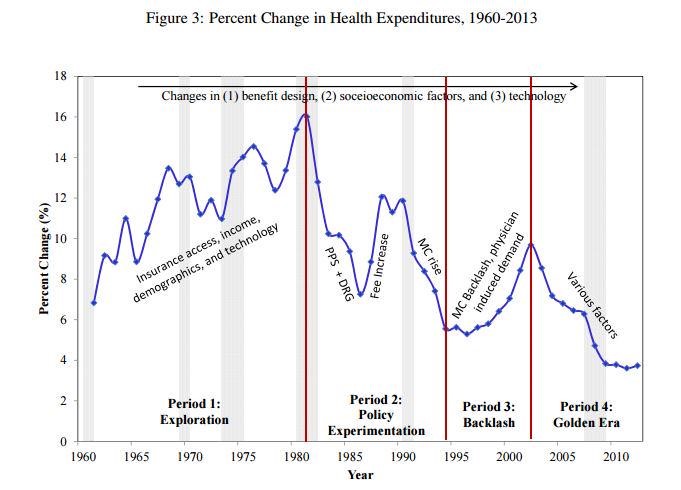 Thanks to Josh Grey for the image.

Thanks to Josh Grey for the image.
Shutterstock Healthcare prices in the U.S. are often hidden. Some people think this price opacity contributes to our nation’s high healthcare spending. If people don’t know how expensive healthcare is, they won’t have much reason to restrain healthcare utilization. A recent study tested what would happen if physicians were immediately informed of the price of lab tests…
California is in the middle of an historic drought, with the government setting limits on how long people can sing in the shower. Farmers in the state may soon need to cut back on planting or production, as ground water dries up. But California is still fruitful ground for testing promising ways to improve how…
In a recent Forbes post, I wrote about geographical variation in healthcare expenses, and pointed out that a lot of this variation occurs after people leave hospitals. That’s when people end up in nursing homes, rehabilitation facilities and the like. Well it turns out, not only is there great variation in these expenses, but these…
Take 100 Americans who have used medical care this year, find the one who has receive the most medical care, and you have probably accounted for a fifth of all healthcare spending in that group. One person, 20% of spending – that is how skewed healthcare consumption is in this country. Here’s a picture, which…
Usually it costs money to get an MRI. But sometimes, in order to save money, insurance companies pay patients to seek less expensive medical care providers. Here is an excellent news report on the topic from The News & Observer: North Carolina’s largest health insurer is proposing a solution to control runaway health care costs:…
Under the Affordable Care Act, the percent of Americans who lack any health insurance has declined significantly. Put another way – more Americans have health insurance than ever. But having insurance coverage is different than being well covered by insurance. Sometimes a person can enroll in a health insurance plan, and still face the kind of out-of-pocket…