On Taxing Rich French People

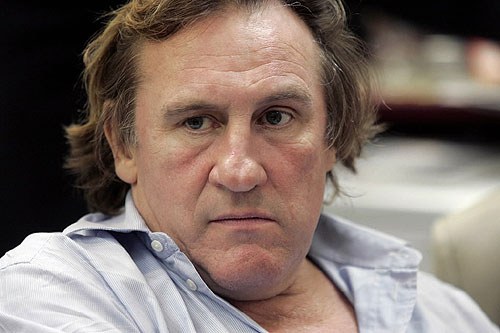
In another great New Yorker article, Lauren Collins writes about controversy over taxing wealthy people in France, a controversy that has already caused Gerard Depardieu to move to Belgium and/or Russia. At one point in the article, she interviews experts to get their views on whether such taxes are effective in raising revenue. One expert pithily explains:

Yes, it works in practice, but does it work in theory?

That is a question we can ask about much of modern social science!
(Click here to view comments)

Similar Posts

  • A Smattering of Quotes from: Last Call – the Rise and Fall of Prohibition

    I have written a couple blog posts recently based on reflections inspired by Daniel Okrent’s wonderful book, Last Call. But there are so many wonderful tidbits from this book, I thought I’d share a few of my favorite quotes. First there is William Jennings Bryan, a prominent force in the Democratic Party at the end…

  • Are Infertility Doctors Turning into Predatory Bankers?

    Somewhere near where you live, a couple will discover this week that they are infertile and that if they want biological children of their own, they are going to need in vitro fertilization (or IVF). According to treatment protocol, the woman will need to take powerful medicines to ramp up her production of fertilizable eggs….

  • Predicting Adaptation to Calamity and Disability

    People often show an amazing ability to emotionally recover from difficult circumstances. I devoted my second book, You’re Stronger Than You Think, to this topic. Now comes some really cool research, showing that people’s ability to bounce back from adversity depends, not all that surprisingly, on their underlying personality traits.  Although this result is not…

  • Before Anesthesia

    In an article from the Atlantic last January, Joshua Lang wrote a wonderful article about the challenge of deciding whether surgical anesthesia actually makes people unconscious, or whether people remember parts of their surgery and are traumatized by them later. In the article, he quotes George Wilson, a Scottish chemist who had his foot amputated…

  • Great Writing, But Not by the Author of the New Thomas Jefferson Biography

    Jon Meacham’s best-selling biography, Thomas Jefferson: The Art of Power, is at best a solid read, presenting the basic facts of Jefferson’s life competently but with little grace and an almost invisible point of view. Perhaps I have been spoiled by Robert Caro’s amazing series of books on Lyndon Johnson, four volumes so far that not only make Johnson come to life (his ruthless genius as well as his fascinating contradictions) but also illuminate a whole era in U.S. history, all the while enveloping readers in gloriously rhythmic paragraphs. It is not fair, perhaps, to compare any biographer to Caro. Meacham’s book, after all, is just a single volume, so it cannot explore Jefferson in the same depth that Caro portrays Johnson. Meacham also had the disadvantage of writing about a man who lived a couple hundred years ago, whereas Caro could interview people who knew the subject of his biography firsthand. In addition, Meacham is a busy man, running a publishing company and appearing on television shows, whereas Caro lives the life of an obsessive, dedicating the better part of his adult life to understanding the ins and outs of Johnson’s life.
    Nevertheless, if you are going to write a book about an American president and subtitle it “The Art of Power,” you better expect some Caro comparisons.
    As it turns out, however, being compared to Caro is the least of Meacham’s writerly problems. Because there is another great writer that readers won’t be able to ignore when making their way through Meacham’s book. That writer, of course, is Thomas Jefferson.
    I’m going to give you a sprinkling of Jefferson’s prose in a bit, and follow-up later this week with several other great Jefferson quotes. But first, a little bit more on Meacham’s book. I was really disappointed, because in Meacham’s hands, Jefferson rarely comes alive on the page. Time passes by and suddenly the reader realizes: “Jefferson just became governor of Virginia? Was that something he was trying to accomplish? Which of the arts of power did he employ to reach that position?” Meacham never provides answers to these kinds of questions.

Leave a Reply