The Psychology of Entrepreneurial Success
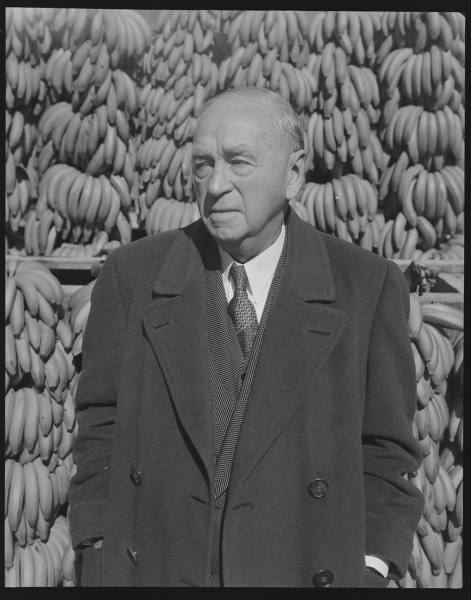
zemurrayIn a recent post, I give you a flavor for Rich Cohen’s wonderful book The Fish That Ate the Whale. One of the things that struck me in reading his book was the psychology of entrepreneurial success. It is often difficult to be a superstar entrepreneur if you are realistic. Often the biggest successes in business are people willing to take ridiculous risks. Cohen captures that well: “There are times when certain cards sit unclaimed in the common pile, when certain properties become available that will never be available again. A good businessman feels these moments like a fall in the barometric pressure. A great businessman is dumb enough to act on them even when he cannot afford to.”
At one point, Zemurray borrows money from some shady characters to pay off his business partner. Cohen summarized the situation: “What was Sam thinking, piling debt on debt, risk on risk? By buying out Hubbard, he was taking it all on his own shoulders. But what did it matter? If he failed by himself, he would lose the exact same amount as if he failed with a partner: everything.”
And sometimes, great business people have an intuitive grasp of social psychology that exceeds that of most PhD students. Take this description of how he negotiated with the folks from United Fruit, before he took over the company: “According to friends, Sam was a sharp trader who knew the price goes to he who does not lose his head or open his mouth too soon. What cannot be accomplished by threats can often be achieved by composure. Sit and stare and let your opponent fill the silence with his own demons.”
And then finally, there is the important ingredient of never being satisfied. As Cohen summarizes it: “Show me a happy man and I will show you a man who is getting nothing accomplished in this world.”
That thought makes me miserable.
(Click here to view comments)

Similar Posts

  • Great Writing, But Not by the Author of the New Thomas Jefferson Biography

    Jon Meacham’s best-selling biography, Thomas Jefferson: The Art of Power, is at best a solid read, presenting the basic facts of Jefferson’s life competently but with little grace and an almost invisible point of view. Perhaps I have been spoiled by Robert Caro’s amazing series of books on Lyndon Johnson, four volumes so far that not only make Johnson come to life (his ruthless genius as well as his fascinating contradictions) but also illuminate a whole era in U.S. history, all the while enveloping readers in gloriously rhythmic paragraphs. It is not fair, perhaps, to compare any biographer to Caro. Meacham’s book, after all, is just a single volume, so it cannot explore Jefferson in the same depth that Caro portrays Johnson. Meacham also had the disadvantage of writing about a man who lived a couple hundred years ago, whereas Caro could interview people who knew the subject of his biography firsthand. In addition, Meacham is a busy man, running a publishing company and appearing on television shows, whereas Caro lives the life of an obsessive, dedicating the better part of his adult life to understanding the ins and outs of Johnson’s life.
    Nevertheless, if you are going to write a book about an American president and subtitle it “The Art of Power,” you better expect some Caro comparisons.
    As it turns out, however, being compared to Caro is the least of Meacham’s writerly problems. Because there is another great writer that readers won’t be able to ignore when making their way through Meacham’s book. That writer, of course, is Thomas Jefferson.
    I’m going to give you a sprinkling of Jefferson’s prose in a bit, and follow-up later this week with several other great Jefferson quotes. But first, a little bit more on Meacham’s book. I was really disappointed, because in Meacham’s hands, Jefferson rarely comes alive on the page. Time passes by and suddenly the reader realizes: “Jefferson just became governor of Virginia? Was that something he was trying to accomplish? Which of the arts of power did he employ to reach that position?” Meacham never provides answers to these kinds of questions.

  • On Education

    “Education is not the transmission of information or ideas. Education is the training needed to make use of information and ideas. As information breaks loose from bookstores and libraries and floods onto computers and mobile devices, that training becomes more important, not less.”  – Pamela Hieronymi, professor of philosophy at UCLA

  • Partisan Drift Over the Environment: Are Republicans Wandering Away from their Voters?

    There’s a fascinating new analysis available, looking at parallels between the politics of health care and the environment. It is led by Theda Skocpol, a social scientist at Harvard (whose writing about health policy and the Tea Party are wonderful). I am reproducing one figure from that report.  It shows, in lines, where Congress has…

  • A Smattering of Quotes from: Last Call – the Rise and Fall of Prohibition

    I have written a couple blog posts recently based on reflections inspired by Daniel Okrent’s wonderful book, Last Call. But there are so many wonderful tidbits from this book, I thought I’d share a few of my favorite quotes. First there is William Jennings Bryan, a prominent force in the Democratic Party at the end…

Leave a Reply