Do Docs Spend More in McAllen, Texas Because People Who Live There Are Obese?
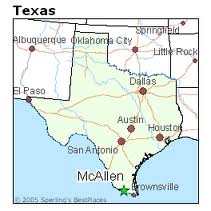
mcallen txIn a very influential 2009 New Yorker essay, Atul Gawande described why health care spending is rampant in McAllen, Texas, an example of the regional variations in healthcare utilization that policy experts at Dartmouth have been studying for years. Indeed, this research has shown much higher spending in places like McAllen, compared to cities like Salem, Oregon, where healthcare costs have not only been historically lower for a couple decades now, but have also grown at slower rates in the ensuing decades.
Late in 2012, Louise Sheiner from the Federal Reserve Board conducted a series of analyses that raised major questions about this whole line of research. Consider the following table, which shows how much of the difference in spending across states in the US “go away” once we adjust for not only the age and wealth of the population, but also the obesity rate, the likelihood that people lack health insurance, and the percent of the population that is African-American… (Read more and view comments at Forbes)

Similar Posts

  • 150,000 Walt Disney Employees Denied Mental Health Coverage – A Headline from the Future

    Newswire Services, April 11, 2015: Breaking News


    Since purchasing the Walt Disney Company six months ago, the Church of Scientologyhas been slowly remaking that venerable institution, in an effort to promote their ambitious religious mission. In the pipeline are an unprecedented number of science fiction films and John Travolta/Tom Cruise buddy movies, changes that have been surprisingly popular among movie fans.
    But now the church is making a change that is not so popular. It has decided that Disney employees will no longer receive insurance coverage for psychiatric care or any medications used to treat mental illness: “Psychiatrists are the enemy of the people,” stated Church spokesperson Walter McGee. “The church opposes their brutal, inhumane treatments and refuses to pay for such services because they collide with our religious beliefs.”
    Many Disney employees are up in arms over this decision. But the church is unrelenting in its position: “If people want to receive devil-care, they can either pay their own money or find a job somewhere else,” said McGee.
    Critics blame the situation on a decision made by President Obama in February of 2012. Early that month, he had announced regulations that would require health insurance companies to cover contraception, with exceptions for churches that oppose birth control but not for larger church run organizations such as hospitals or universities. The Roman Catholic Church cried foul, claiming that their religious freedom was being violated. In response to pressure, the Obama administration quickly backed off on its policy, broadening the religious exception to any church owned business that was run as part of the church’s broader religious mission.
    That shift in policy opened an opportunity for religious organizations to carve a broader set of services out of their health insurance plans. The Jehovah’s Witnesses had gained ownership of Wal-Mart in late 2013, and soon employees of that company (at least the ones who get health insurance) no longer received coverage for blood transfusions. An Orthodox Jewish organization became majority owners of Ace Hardware in early 2014, and now employees of that company no longer receive insurance coverage for insulin products that are derived from pork.
    The Church of Scientology is undeterred by critics who claim that treatments like antipsychotic medications and antidepressants ought to be part of any basic health insurance plan. “America is the land of religious freedom,” he explains “a place where the government has no right to stand between a church and its employees.”
    Who could argue with that logic?

  • Medicaid Expansion/Lack of Expansion Plans: In A Map

    For anyone interested in health policy, Sarah Kliff at the Washington Post has perhaps the most useful and informative blog to be found. Here’s a picture she posted recently, showing the status of state Medicaid programs, in a post exploring which states she expects to be revisiting their decisions about how, or whether, to expand in…

  • |

    If You Want to Avoid a C-Section Choose Your Hospital Wisely

    We have an epidemic of C-sections in the US, now accounting for almost 1 in 3 births. That represents a 50% increase since the mid-90s, despite all the advances we’ve seen in obstetrical care. Sometimes C-sections are critical to saving the life of either baby or mother. But C-sections are major surgical procedures, with commensurate risks….