The Relentless Rise of Healthcare Expenditures
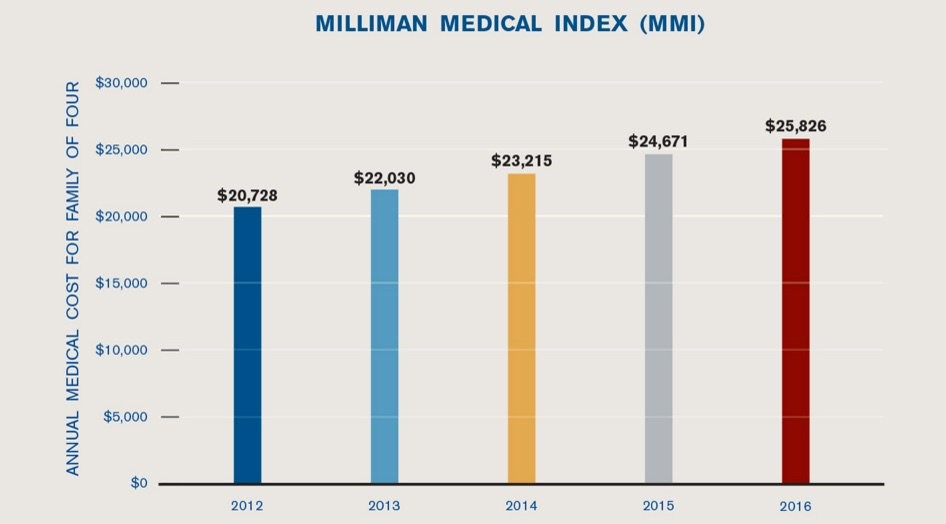
Need I say more?

Need I say more?
Health insurance is not what it used to be. With increasing frequency, Americans who purchase private health insurance find themselves with plans that require them to fork over significant amounts of money every time they receive healthcare. That means if you get, say, a heart attack, your portion of the hospital bill is probably going…

If you get insurance through your employer, you don’t have to worry about whether insurance will cover maternity care. The company is required to do so by law. But that doesn’t mean the insurer will be very generous. Because in the United States, having coverage doesn’t mean you’re well-covered. Employers are increasingly corralling their employees into high…
What would you like first: the good news or the bad news? Let me start with the bad. Life expectancy among patients in the U.S. with thyroid cancer lags behind that in Korea. In fact, the vast majority of patients diagnosed with thyroid cancer in Korea are cured of that illness, a statement I can’t…
If you have been paying attention to US healthcare policy debates lately, you know that hospitals have a price problem. Walk across the street from one hospital to a competitor hospital, and you could easily find yourself facing a $30,000 increase in your medical bills. At one extreme for instance recent information shows that replacing your hip…
Here is Eisenhower drawing out the connection between science and liberty: “Love of liberty means the guarding of every resource that makes freedom possible—from the sanctity of our families and the wealth of our soil to the genius of our scientists.” I would love to see a presidential candidate pick up this theme.
In a recent report from the IOM, the US comes in with surprisingly low life expectancy compared to other developed countries. Take, for instance, this picture from USA Today, showing life expectancy for women:

At the same time, we spend WAY MORE on health care than any of our peers. No one is even a close second. Does that mean our spending is not yielding appropriate results? Those of you who follow my writing (I’m talking to BOTH of you) know that I have serious concerns about health care spending in the US. But keep in mind, that life expectancy is a TERRIBLE measure of health care quality…(Read more here)