The Relentless Rise of Healthcare Expenditures
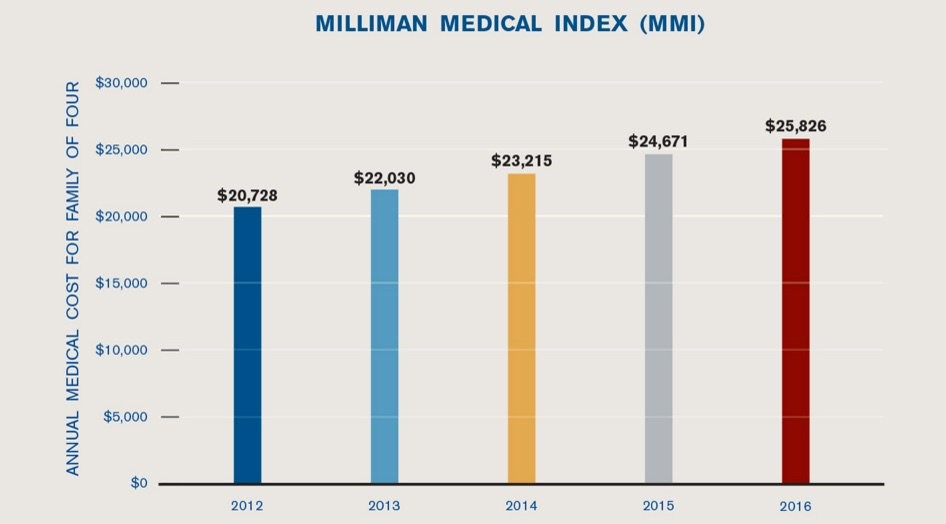
Need I say more?

Need I say more?
Here’s a picture from a New England Journal of Medicine article showing that in 2015 and 2016, Obamacare premiums grew more slowly than private insurance premiums rose before the law came into effect: The Obamacare markets are new and unsettled. But so far they aren’t leading to runaway inflation. But what will happen to these…
Lots of folks in the U.S. are finding themselves with health insurance coverage that requires them to pay lots of money, in their deductible, before insurance kicks in. Here is a nice piece in Cancer Today Magazine on the topic: Tammy Pope had already exceeded her health insurance plan’s $5,000 deductible for 2015 by August….
A recent study of men with early-stage prostate cancer found no difference in 10-year death rates, regardless of whether their doctors actively monitored the cancers for signs of growth or eradicated the men’s cancers with surgery or radiation. What does this study mean for patients? Based on research we have conducted on prostate cancer decision-making,…
In a recent Forbes post, I wrote about geographical variation in healthcare expenses, and pointed out that a lot of this variation occurs after people leave hospitals. That’s when people end up in nursing homes, rehabilitation facilities and the like. Well it turns out, not only is there great variation in these expenses, but these…
Thanks to Josh Grey for the image.
Here is a write-up of a talk I recently gave at the NIH. The topic is a good one, about doctors and decision making and all that crap. But the real importance of linking you to the story is to find out if you hate my sport coat as much as my wife does. It…