|

Want narcotics just ask for them?
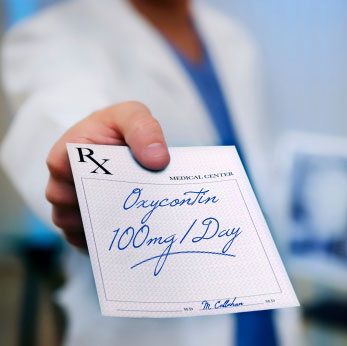
oxycontin-prescriptionA very disturbing new study was just published, in which physicians viewed a video of a patient with back pain asking for OxyContin. Twenty percent of docs said they would prescribe that med under that circumstance:

…Too often, doctors prescribe potentially dangerous medications to patients who shouldn’t be getting them, and what they prescribe is influenced by the pills patients ask for.
The study found that patient requests for certain medications — such as the powerful narcotic oxycodone — “substantially affected physician-prescribing decisions, despite the drawbacks of the requested medications.” The results suggested that even a gentle request from a patient could convince a doctor to prescribe potent, potentially dangerous narcotics — even when they’re not the best-practice treatment for the patient’s condition…(Read more about the study here)

(Click to view comments)

Similar Posts

  • Do Starbucks Employees Have More Emotional Intelligence than Your Physician?

    A cranky customer snaps at his barista, lodging an unjustifiable complaint about the service, the temperature of the drink…about anything and everything.  He came into the store angry (and in pain from a chronic illness) and he needed something–or someone!–to take it out on. He is met by a well-trained smile, the barista doling out…

  • Vacation Time!

    I am not going to be posting any new blogs for a while, because I will be traveling – a nice mixture of vacation and writing, mostly out of reach of desktop computers and laptops. I expect to return in August, refreshed and reinvigorated. I hope all of you find some summer relaxation time too….

  • Great Writing, But Not by the Author of the New Thomas Jefferson Biography

    Jon Meacham’s best-selling biography, Thomas Jefferson: The Art of Power, is at best a solid read, presenting the basic facts of Jefferson’s life competently but with little grace and an almost invisible point of view. Perhaps I have been spoiled by Robert Caro’s amazing series of books on Lyndon Johnson, four volumes so far that not only make Johnson come to life (his ruthless genius as well as his fascinating contradictions) but also illuminate a whole era in U.S. history, all the while enveloping readers in gloriously rhythmic paragraphs. It is not fair, perhaps, to compare any biographer to Caro. Meacham’s book, after all, is just a single volume, so it cannot explore Jefferson in the same depth that Caro portrays Johnson. Meacham also had the disadvantage of writing about a man who lived a couple hundred years ago, whereas Caro could interview people who knew the subject of his biography firsthand. In addition, Meacham is a busy man, running a publishing company and appearing on television shows, whereas Caro lives the life of an obsessive, dedicating the better part of his adult life to understanding the ins and outs of Johnson’s life.
    Nevertheless, if you are going to write a book about an American president and subtitle it “The Art of Power,” you better expect some Caro comparisons.
    As it turns out, however, being compared to Caro is the least of Meacham’s writerly problems. Because there is another great writer that readers won’t be able to ignore when making their way through Meacham’s book. That writer, of course, is Thomas Jefferson.
    I’m going to give you a sprinkling of Jefferson’s prose in a bit, and follow-up later this week with several other great Jefferson quotes. But first, a little bit more on Meacham’s book. I was really disappointed, because in Meacham’s hands, Jefferson rarely comes alive on the page. Time passes by and suddenly the reader realizes: “Jefferson just became governor of Virginia? Was that something he was trying to accomplish? Which of the arts of power did he employ to reach that position?” Meacham never provides answers to these kinds of questions.

  • Show ‘Em the Money: Paying Patients to Shop for Affordable Medical Care

    After three months of physical therapy, her doctor told her that it was time to get an MRI. She had already paid off her annual deductible, meaning the imaging test would “only” cost her the $150 co-pay. An imaging center near where she worked charged $1500 for the test. Just two miles away, another facility…

Leave a Reply